
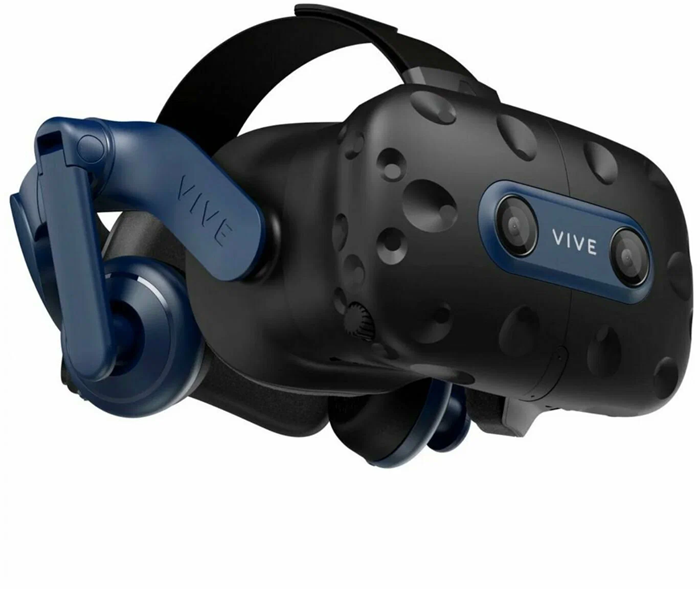
The virtual reality (VR) business is a market that combines technology, entertainment, training, and corporate services. To build a sustainable model, it is crucial to define exactly what you are selling from the outset: access to content, solution development, equipment rental, or a comprehensive turnkey service.
Success in VR https://battlestart.com/ often depends not on the “wow factor,” but on choosing the right niche, having a clear project financial model, and maintaining a steady flow of clients. Below is a practical plan to help you turn your idea into a functioning business and scale it cost-effectively.
Launch: From idea to first sales
Launching a VR business should be based on a Minimum Viable Product (MVP) approach: do not buy all the equipment at once or spend months developing “perfect” content without first validating demand. Instead, start by assembling a service package that you can sell within the next 2–4 weeks.
Equipment and content: What you need at the start
Your basic setup depends on your business model. For a VR arcade, reliable headsets, gaming stations, and a safe play area are essential. For B2B development, expertise is more important: 3D modeling, game engines, VR UX design, testing, and ongoing support. Content can be categorized into three types:
- Ready-made content: Allows for a quick launch but makes it harder to stand out.
- Adapted content: Customized for a specific niche and client scenarios.
- Proprietary development: More expensive, but creates uniqueness and increases profit margins.
Unit economics and pricing
Before launching, calculate a simple model: revenue minus variable costs minus fixed costs.
For a VR club, key metrics include hourly utilization and average revenue per visitor. For a development studio, they are project margins and team workload forecasts. Set prices so that, even under a conservative scenario, there is a buffer for marketing, content updates, and equipment maintenance.
Sales and marketing: how to quickly find clients
For B2C, focus on clear offers: “VR games for groups,” “birthday packages,” or “turnkey corporate events.” For B2B, case studies and ROI calculations are crucial—highlighting benefits such as reduced injury rates, faster training, and increased sales conversion. Use this combination:
- Lead magnet: a demo session, free VR tour, or trial training session.
- Core product: an hourly package/subscription or a pilot project.
- Upselling: ongoing support, updates, expanded scenarios, and event rentals.
Find more information about the virtual reality business on the website.
Scaling and sustainability
Once you achieve consistent initial sales, move on to scaling: improve the product, automate processes, and boost repeat sales. In VR, it is crucial to regularly update content and maintain service quality; otherwise, clients lose interest after their first visit.
How to grow the project after launch
- Update your scenario library: introduce new titles on a schedule and create “seasonal” collections.
- Build partnerships: with event agencies, schools, real estate developers, and corporate HR or occupational health and safety departments.
- Package your franchise or branch operations: establish protocols, staff training, quality standards, and performance monitoring.
- Gather analytics: track purchase conversion rates, repeat visits, daily utilization, and content ROI.
Bottom line: to build a virtual reality business, choose a niche with clear value, launch with a minimum viable product (MVP), and quickly generate your first sales. Then, focus on driving repeat business, building partnerships, and enhancing content quality—this is what transforms VR from a one-off entertainment experience into a stable business.
Summary: choosing a VR niche based on client pain points
Choosing a VR niche becomes easier when you focus on a specific client pain point—such as the loss of money, time, quality, safety, or reputation—rather than the technology itself. The more measurable the loss and the clearer the economic impact of implementation, the faster the decision is made and the more resilient the business model becomes.
A strong niche lies at the intersection of three factors: an acute and frequent pain point, access to decision-makers and budgets, and your ability to deliver results quickly (via MVP, pilot program, or full implementation). It is important to focus not on the “VR market” in general, but on a specific use case where a virtual environment addresses a task better and more cost-effectively than the alternatives.
A quick selection checklist: 4 areas and their “pain points”
- Staff training: high cost of errors, risk of injury, equipment downtime, expensive simulators, inconsistent standards. Value: safe practice, standardization, and skills monitoring.
- Entertainment: fierce competition for attention, seasonality, need for content updates. Value: “wow factor,” repeat visits driven by new scenarios and events.
- Design and visualization: approval errors, rework, issues with scale perception, complex client communication. Value: decision-making prior to construction or production, fewer revisions, faster approvals.
- Healthcare: need for standardized skills, high-stress procedures, limited access to real-world cases; high cost of clinical errors. Value: safe simulations, training, and rehabilitation protocols.
- Formulate a single pain point in one sentence and validate it through interviews (at least 10–15 conversations) with decision-makers.
- Define a measurable outcome: reduced training time, lower error/injury rates, increased conversion/revenue, or reduced rework.
- Select a monetization model: selling the solution, content/update subscriptions, equipment rental, or a turnkey service including implementation.
- Launch a pilot with a minimal scenario and metrics, then scale up the case library and standardized modules.